WeLevel | Advertising Performance Brief
Maximizing the return on every advertising dollar
How AI-assisted website engagement can turn more paid traffic into leads and booked appointments.
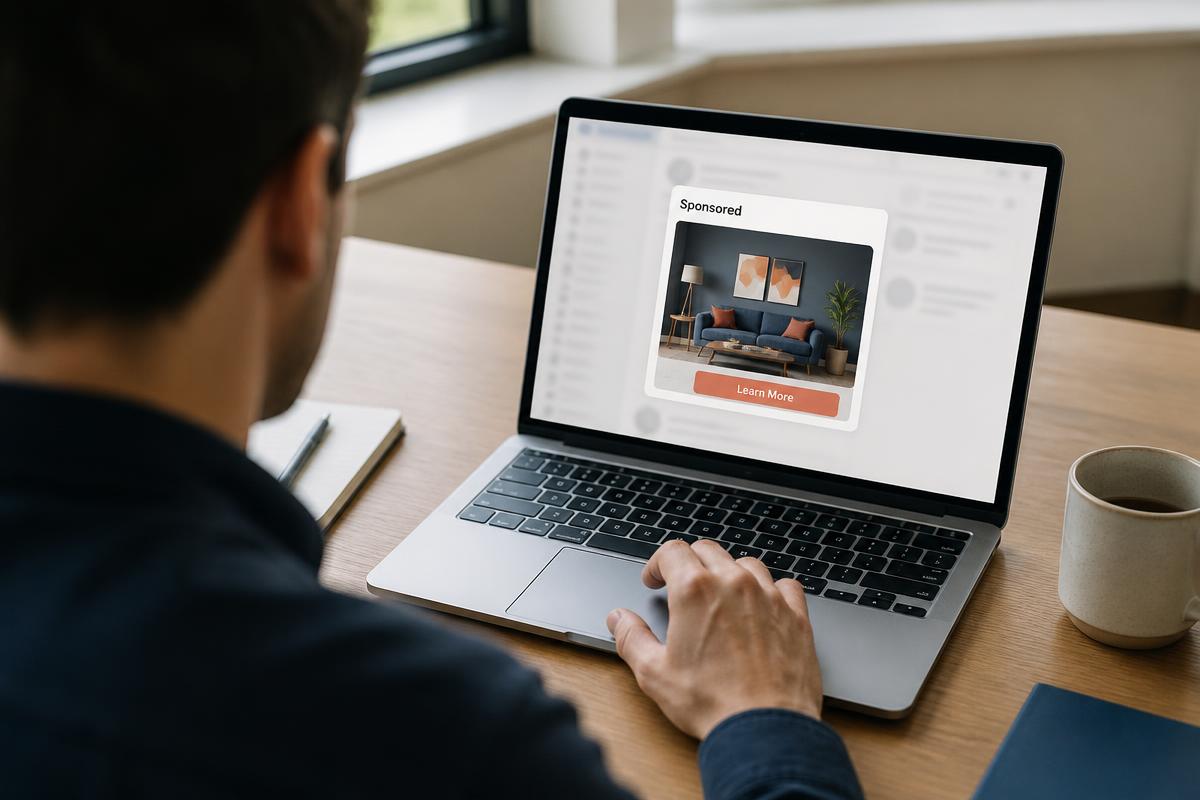
You're paying for the traffic. Don't you want more sales from it?
The problem after the click
Advertisers spend thousands of dollars sending prospective customers to a website. Most of that traffic arrives, looks around and leaves, because the site asks the visitor to do the work.
01
Find the answer
The visitor hunts through pages for the one detail that matters to them.
02
Fill out a form
Interest is highest at the click, and the form asks them to wait instead.
03
Wait for a reply
By the time someone follows up, attention has moved on.
An AI Sales Assistant changes what happens next
The visitor has a conversation immediately, gets questions answered, is qualified along the way, and can book an appointment on the calendar without leaving the website. Contact details and context pass straight into the CRM.
More leads and appointments from the same advertising budget.
Where the prospect actually lands
Every advertising dollar is trying to move a prospect further down the funnel. A form stops the prospect at the lead stage, where someone still has to chase the meeting. The AI Sales Assistant is connected to the calendar, so it hands over a booked appointment instead.
The closer to the transaction the handoff happens, the more each dollar of media is worth to the advertiser.
Ad impressions
Reach
Paid media working
Clicks
1,000
Traffic the advertiser paid for
Engaged visitors
Interest
Looking for one answer
Form lead
30
Where a form-first website stops. The lead still has to be nurtured to get a meeting.
Qualified conversation
~43
Questions answered, fit confirmed
Booked appointment
~34
Where the AI Sales Assistant lands the prospect, on the calendar.
Sale
Revenue
The outcome the advertiser is buying
A $5,000 monthly advertising example
$5,000 in monthly media at a $5 average cost per click produces 1,000 website visitors. The only variable that changes below is what happens after the click.
Without an AI Sales Assistant
Form-first website experience
$5,000
Monthly media spend
1,000
Website visitors
3.0%
Conversion rate
30
Leads
9
Appointments
AI Sales Assistant conversion layer
With an AI Sales Assistant
Conversation-first website experience
$5,000
Monthly media spend
1,000
Website visitors
~4.3%
Conversion rate
~43
Leads
~34
Appointments
The two columns also book at different rates. A form lead has to be nurtured before it becomes a meeting, so 30% of those leads are modeled as booking. The AI Sales Assistant is connected to the calendar and books the meeting inside the conversation, so 80% of qualified conversations are modeled as booking. Both rates are illustrative modeling assumptions, not industry benchmarks.
Same $5,000 media budget
+$0
Additional media spend
+13
More leads per month
+25
More appointments per month
~74%
Lower cost per appointment
Without buying another click.
What it does to cost per appointment
Leads are great. Appointments are better. The same media spend lands the prospect closer to the transaction when the assistant books the meeting inside the conversation.
$556
Cost per appointment today
$5,000 ÷ 9 appointments
at the same spend, driven by conversion and scheduling
$147
Cost per appointment with the assistant
$5,000 ÷ ~34 appointments
The advertiser is not asked to spend less. The same media investment simply returns more qualified conversations and booked appointments.
Revenue impact
Cost per appointment is the headline. The table below shows how that same $5,000 spend translates into revenue when the assistant lands the prospect on the calendar.
Outcome
Form first
With the assistant
Leads per month
30
~43
Lead to appointment rate
30.0%
80.0%
Booked appointments
9
~34
Cost per appointment
$556
~$147
Closed deals
1.8
~6.8
Revenue from the same spend
$7,200
~$27,200
Return on ad spend
1.4x
~5.4x
Revenue assumes a 20% close rate on booked appointments and a $4,000 average transaction value. Substitute the advertiser's own close rate and transaction value to model their category.
What the upside looks like
Scenario
Conversion
Leads
Current performance
3.0%
30
+25% conversion lift
3.8%
~38
+43% conversion lift
4.3%
~43
+50% conversion lift
4.5%
~45
The same media spend. The same audience. The same creative. What changes is the conversion layer after the click. A 25% to 50% lift is a realistic range to test, not a guarantee, but even the conservative end turns a thin margin into a campaign that can scale.
What the market data shows
43%
HubSpot reported a 43% increase in chat conversion rates after adding AI to its own website chat experience, along with more than a 50% improvement in value per chat.
HubSpot 1
82%
Across an aggregate dataset of 20 million live chat messages, Intercom found website visitors were 82% more likely to convert to customers if they had chatted first.
Intercom 2
36%
In the same Intercom dataset, conversations handled with bot assistance converted 36% better, attributed largely to faster response on routine questions.
Intercom 2
250%
Intercom found a single reply in the messenger raised the likelihood of conversion by 50%, and a short six-message exchange made a visitor 250% more likely to become a customer.
Intercom 2
13%
Intercom also reported that accounts which had a conversation before signing up were worth 13% more than those that did not.
Intercom 2
25%
In a customer example published by Intercom, Copper generated 25% more leads and nearly 20 new opportunities within one month of moving its website chat experience.
Intercom and Copper 2
Why it works
Instant engagement
Answers arrive while interest is at its peak.
Less friction
Ad click to conversation, with no form required.
24/7 coverage
Traffic still converts after hours and on weekends.
Lead qualification
Questions get asked before sales gets involved.
Instant scheduling
Qualified prospects book straight into the calendar.
Better attribution
Conversations, leads and appointments tie back to campaigns.
The virtuous cycle behind a growing ad channel
Each turn of the loop makes the same media budget work harder: spend, convert, close, and reinvest.
Ad spend
Paid media drives qualified traffic.
Appointments
AI assistant books meetings on the calendar.
Reinvest
Profits fuel the next media cycle.
Sales
More conversations become closed deals.
Ad spend
Paid media drives qualified traffic.
Appointments
AI assistant books meetings on the calendar.
Sales
More conversations become closed deals.
Reinvest
Profits fuel the next media cycle.
Why this matters to the media partner
You've optimized the audience, the creative and the media. Now optimize what happens after the click.
The media partner already controls the traffic. The AI Sales Assistant becomes the conversion layer that sits behind it, so the same campaign produces more of the outcomes an advertiser actually measures.
- Stronger advertiser ROI on the same media budget
- Lower effective cost per appointment without cutting spend
- More measurable outcomes to report on
- A clearer case for renewing the media investment